
Danny Boyle and Alex Garland have always been ahead of the curve when it comes to reinventing the zombie genre. 28 Days Later (2002) revive it, and redefined it. It sparked a new wave of interest that reshaped how we think about zombie films.
And after that, the Zombie floodgates opened — You got Zack Snyder’s remake of George Romero’s Dawn of the Dead (2004), I Am Legend (2007), Zombieland (2009), World War Z (2013), plus the entire Resident Evil machine… and of course, The Walking Dead and everything that came with it. But all of the recent zombie content traces back to Boyle and Garland.
I recently revisited 28 Days Later, and it still holds up. It carries that late ’90s / early 2000s digital grit, raw, unpolished, almost documentary-like. The sequel, 28 Weeks Later (2007) expanded the scope, hinting that the infection had spread worldwide, beyond the UK.
However, fast forward to 28 Years Later and the outbreak is now contained to the UK mainland. The rest of the world has moved on. Life continues elsewhere — normal, disconnected, almost indifferent.
The story centers on Spike (Alfie Williams), a 12-year-old boy stepping into his first real test of survival. A traditional rite of passage into the wilderness. His first time leaving the safety of the compound where he lives with his parents Jamie (Aaron Taylor-Johnson), and Isla (Jamie Cormer). This compound is populated by a well-organized, and functional community. This fortress is located in Lindisfarne — an island naturally protected by a causeway that disappears with the tide. Which was a genius component to the story.
On Spike’s first expedition, he comes face-to-face with the virus. And they barely make it back alive. At home, his mother Isla is sick — bedridden, fading, with no clear diagnosis and no real hope. But during that expedition, Spike hears about a doctor somewhere deeper inland. Someone who might be able to help. So he does what people in these stories always do. He takes matters into his own hand, escapes with his mother from the compound, and into the wilderness in search of this Doctor.
The other two supporting characters are great. Edvin Ryding plays a stranded Swedish soldier. Through him, we get glimpses of what the rest of the world looks like now. Phones. Social media. Food delivery apps. Things that feel alien to Spike. A world where people are still ordering food, scrolling through their phones, posting pictures like nothing ever happened.
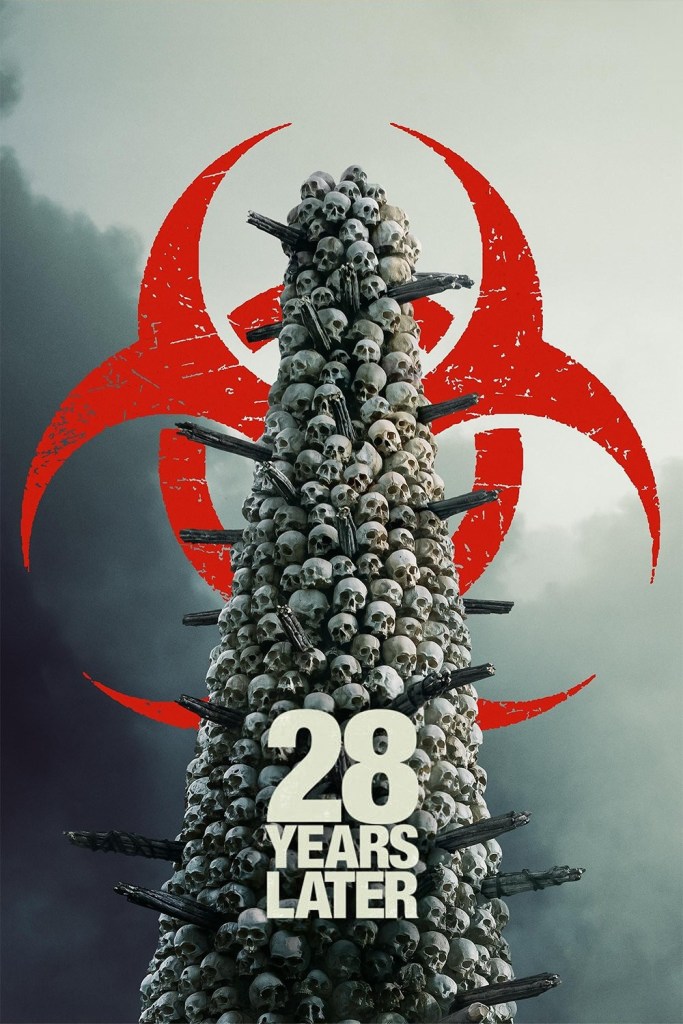
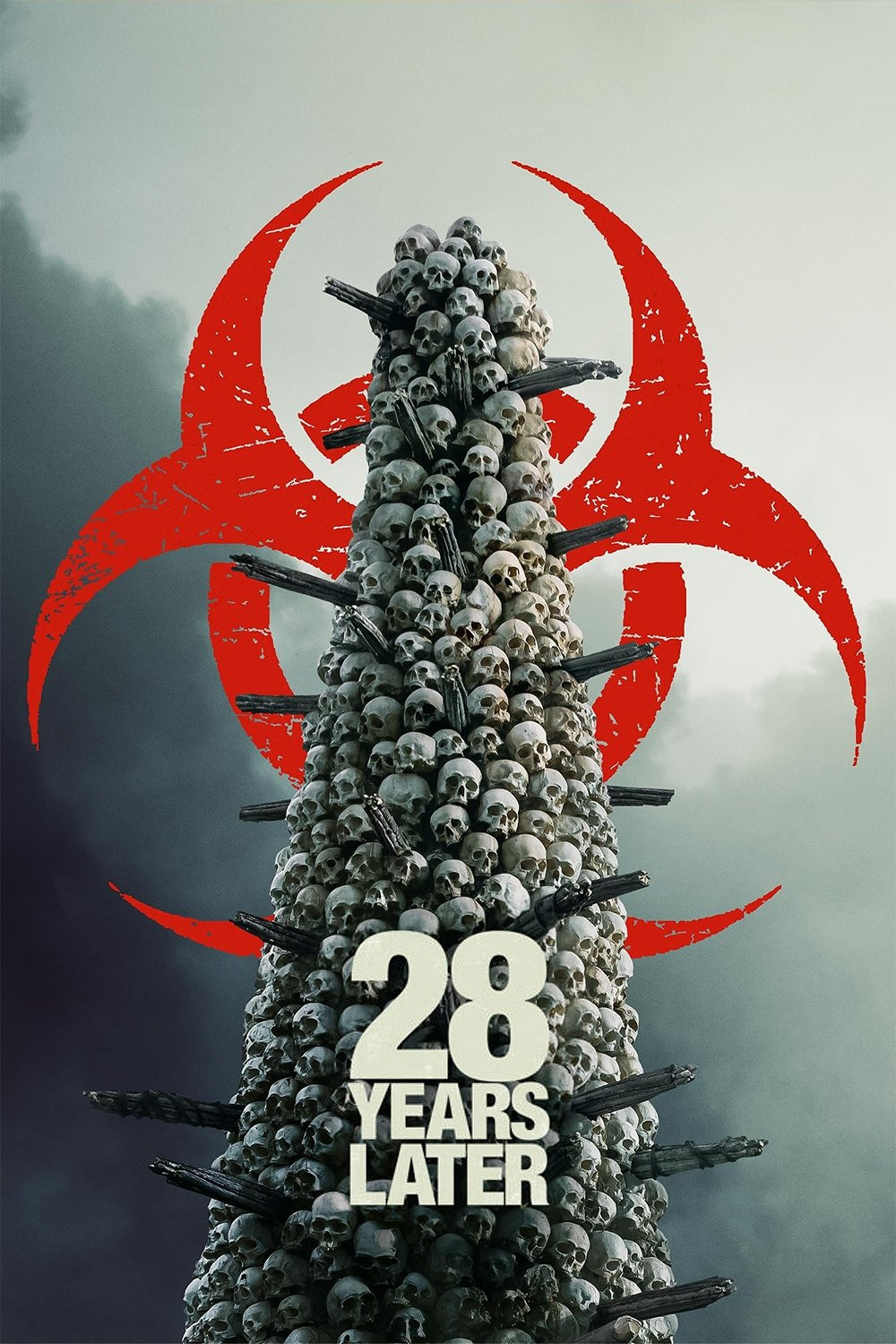
Then there’s Ralph Fiennes as Dr. Kelson. Easily the most compelling presence in the film. He’s not just surviving — he’s memorializing. Burning bodies. Collecting bones. Building a kind of shrine to the dead. A living monument to everything that’s been lost. His world isn’t about escape, it is a reminder — it’s Memento Mori
The introduction of the Alphas — a more evolved, more dangerous variant of the infected — adds another layer to the threat. Stronger, faster and less predictable.
Visually, the film is striking. The British countryside looks beautiful… but empty. Anthony Dod Mantle cinematography is excellent, and the decision to shoot much of it on iPhones gives it that same raw, unsettling vibes from the original movie— Almost like Guerrilla style filmmaking.
28 Years Later isn’t just another sequel. It expands the world in a way that feels intentional, and controlled. It’s still scary, but it’s also reflective. A story about survival, yes — but also about isolation, memory, and what gets left behind. This is clearly the first chapter in a series of movies. A trilogy that promises to circle back to the origins — and eventually to the return of Cillian Murphy’s 28 Days later character.
And that’s the most exciting part. Because this story felt like it was never really finished.
28 YEAR LATER (2025). THREE OUT OF FIVE POPCORN BAGS 🍿🍿🍿