

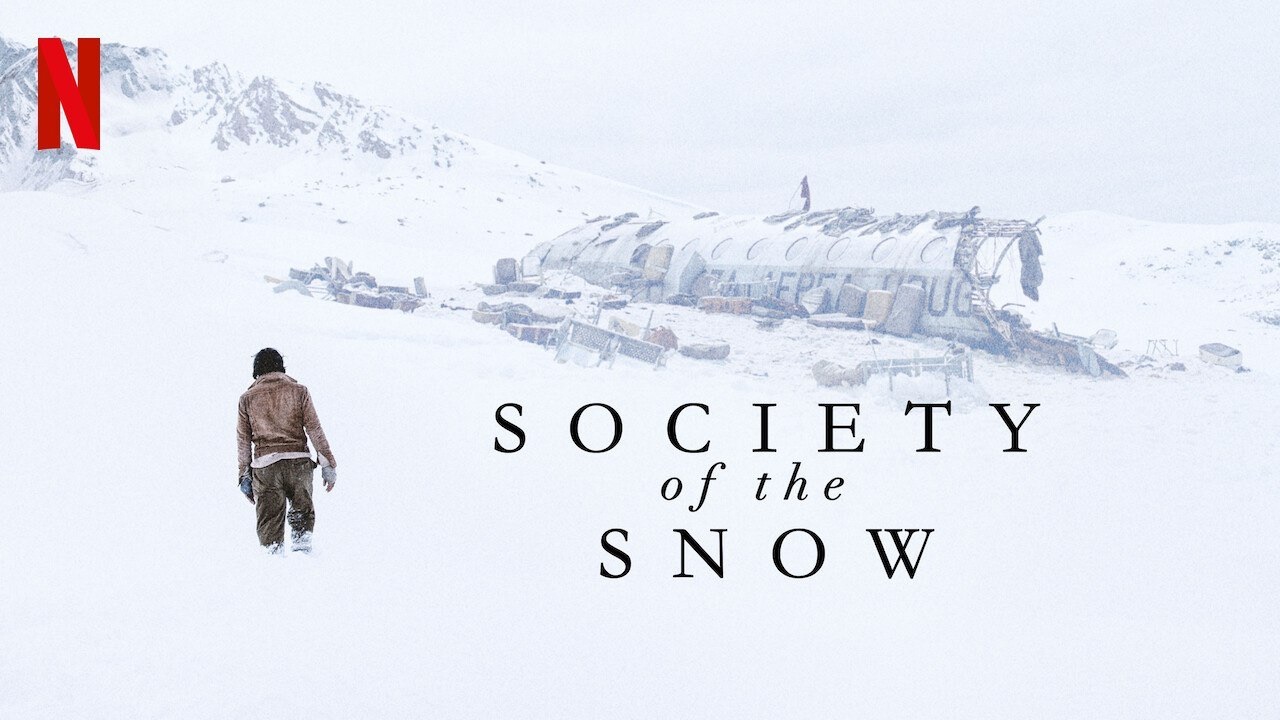
I been fascinated by this true story for as long as I can remember. In the 80s, when I was a kid, I watched Los Supervivientes de los Andes (1976), an ambitious Mexican production directed by René Cardona and based on the book Survive! by Clay Blair Jr. The cast was made up of young, up-and-coming Mexican telenovela actors — Hugo Stiglitz, Sebastián Ligarde, Leonardo Daniel, Carlos Cámara and others — faces, and names that would later become staples of Mexican television.
But back then, none of that really mattered to me. Maybe I was too young to fully understand it. I just knew something about the snow, the mountains, the desperation on their faces — It disturbed me, and captivated me in a way few films ever had. And decades later, it still does.
Over the years, this tragedy has been revisited multiple times. Alive (1993), directed by Frank Marshall and starring Ethan Hawke, introduced the story to a new generation. Even the Showtime TV series, Yellowjackets borrows from this tragedy with a similar premise. A plane full of female high school soccer players crashes on their way to compete in a game. Forcing the survivors to find ways to endure, including resorting to cannibalism. But most recently, The Society of the Snow, based on the book, La Sociedad de la Nieve by Pablo Vierci, may be the closest adaptation we’ve ever seen. And it hits differently than the previous versions.
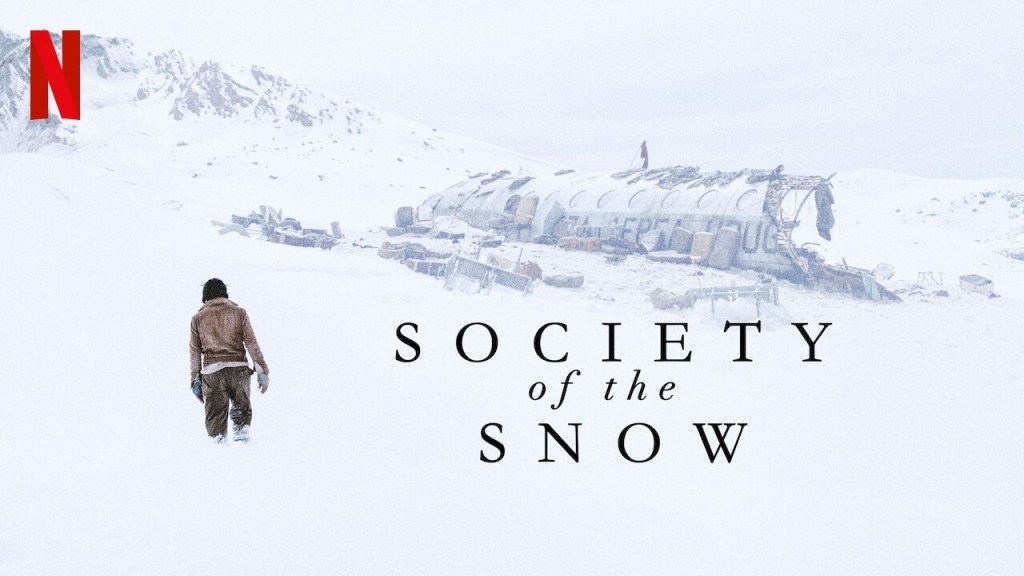
It was supposed to be a routine flight on a Fairchild aircraft, chartered by the Uruguayan Air Force, carrying young rugby players from the Old Christians Club team, along with family members and friends—from Uruguay to Chile for a rugby match. Instead, it became 72 days of survival in the snow-covered Andes mountains. It has been widely accepted that a combination of technical miscalculations and pilot error was the caused of the crash.
Unlike the earlier film versions, this one allows us to see more of the characters before the crash. Their camaraderie, their youthful arrogance, and even glimpses of their family dynamics are captured beautifully. The cast is a mix of Argentinian and Uruguayan actors, which adds another layer of authenticity. The plane crash is intense, loud, visceral and violent. The impact is brutal, metal tearing through mountain air, bodies colliding, snow swallowing everything in its path. It’s technically impressive and gorgeously shot.
The individual storylines are solid, but at times, it can be a bit hard to follow and differentiate the individual characters. However, Numa’s narration helps ground the experience and guide the viewer through the story. Even then, it’s sometimes a struggle to hold onto specific arcs. But that may be the point. This isn’t about a single hero. It’s about the collective sense of despair, resilience, and hope coexisting in every frame. Human bonds forged in extreme weather conditions, and faith tested at 12,020 feet.
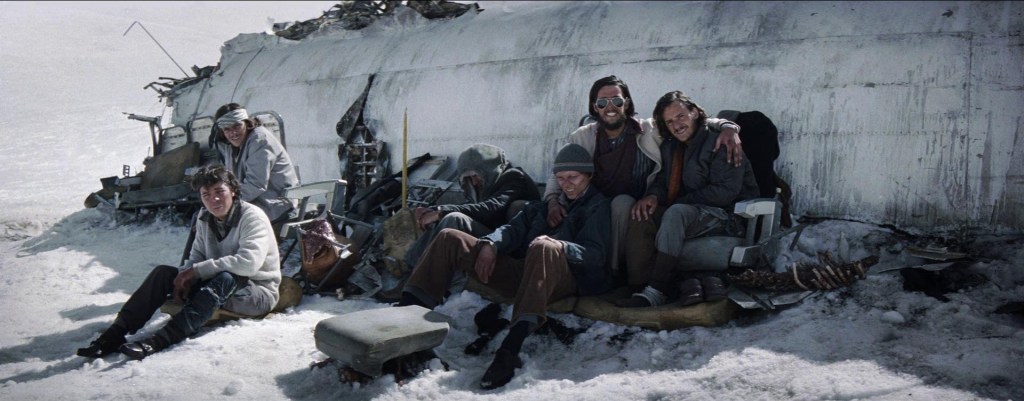
The psychological tension of being stranded and the lost comfort of civilization becomes evident almost immediately. The cannibalism is not vulgarized or sensationalized. It is presented as a horrifying necessity for their survival. They are not depicted as monsters — just human beings refusing to die. Another element that stands out here, compared to the earlier films, is the passage of time before rescue. The excursions away from the crash site, searching for help feels endless.
Technically, the film is remarkable. Pedro Luque’s cinematography is gorgeous. The avalanche scenes feel claustrophobic—you can almost sense the thin oxygen of the Andes. Plus, the score amplifies the isolation, and the overall tension that lingers throughout the movie. Director J.A. Bayona (The Orphanage, A Monster Calls, Jurassic World:Fallen Kingdom), delivers an impressive survival epic.
The Society of the Snow easily stands as one of the most powerful films of this decade, and one of my favorites.
Five out of Five Popcorn Bags🍿🍿🍿🍿🍿
THE SOCIETY OF THE SNOW (2023)
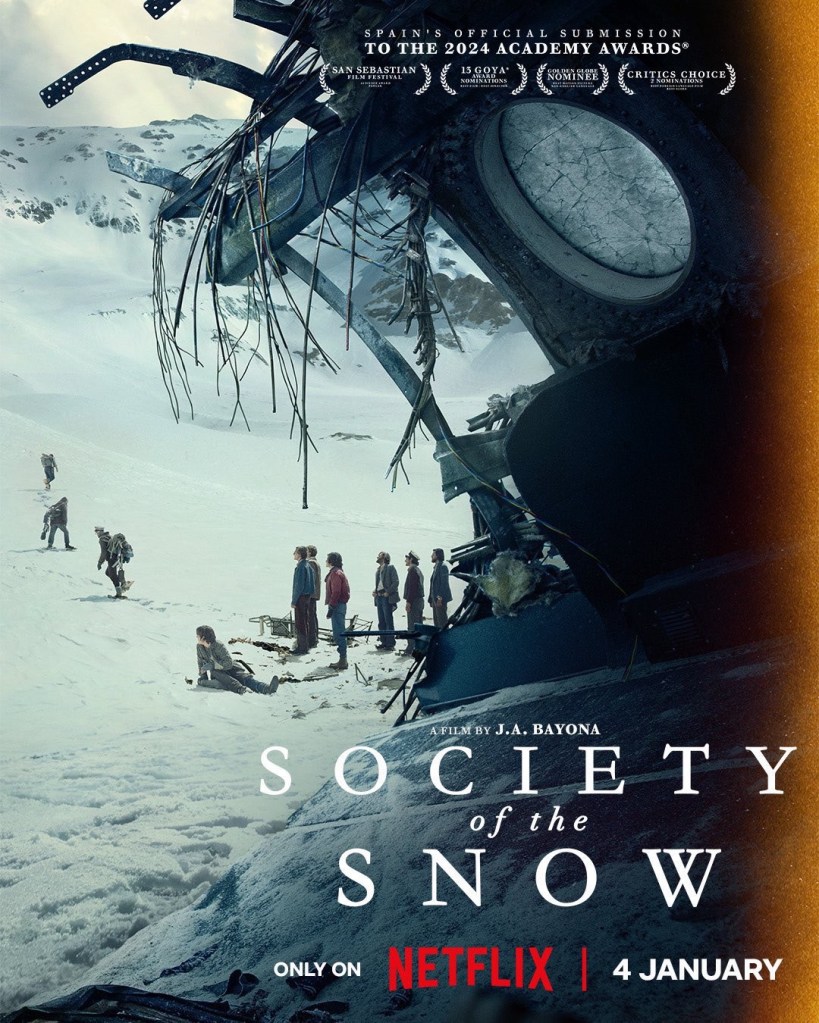

 Rod Rioja