

There was a time when Planet of the Apes films had something urgent to say—especially the original entries from the ’60s and ’70s, which tackled civil rights, nuclear anxiety, and global politics head-on. Compared to those films, Kingdom of the Planet of the Apes doesn’t have much to say. It revisits the familiar theme of humanity’s downfall told through the rise of apes, but lacks the depth and urgency that defined its predecessors.
Set several generations after War for the Planet of the Apes (2017) and the end of Caesar’s storyline, apes now roam the Earth as the dominant species. However, their society remains fragmented and primitive, organized into disconnected tribes scattered across the planet. Much like early humans, these ape societies have developed religion and mythologies, though many are built on distorted truths meant to serve their own narratives.
We follow Noa (Owen Teague), a young chimpanzee from the Eagle Clan—a tribe that raises and worships eagles. They have no memory of the old world or that humans once ruled the planet. When his tribe is attacked and survivors are taken hostage by a rival ape faction, Noa embarks on a rescue mission that quickly becomes a journey of self-discovery — Raised with narrow beliefs, he begins to question the foundations of his worldview.
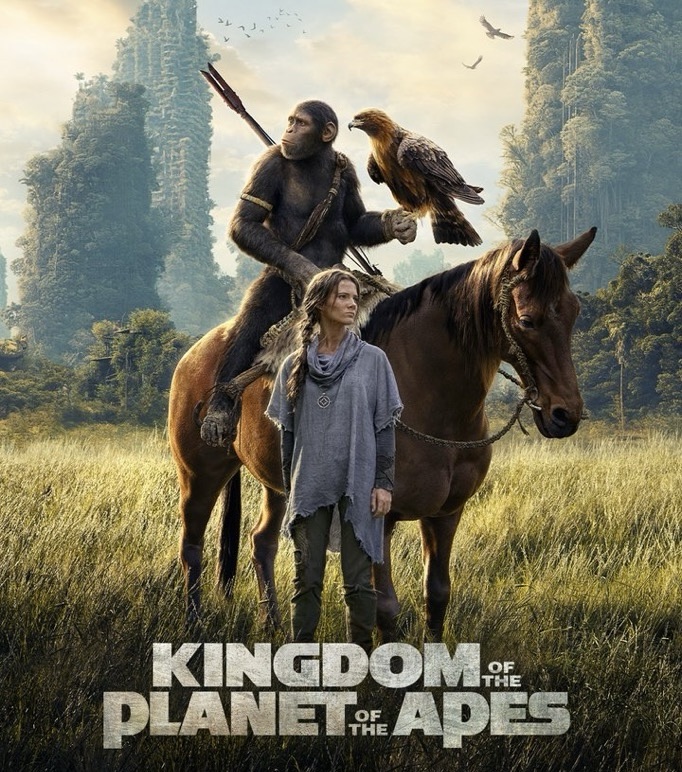
Noa, unfortunately, lacks the charisma and complexity that made Caesar such a compelling character. Still, he’s surrounded by intriguing new characters. Chief among them is Raka, an orangutan preserving the teachings of Caesar and advocating for harmony between humans and apes. Raka seems to be one of the last apes who remembers the truth about their origins.
The antagonist, Proximus Caesar (Kevin Durand), is a fascinating and dangerous presence. He’s twisted Caesar’s philosophy to justify his own power grab. He’s built an encampment around a vast, dam-like bunker from the 21st century—his goal: to access the lost human technology and weaponry hidden inside. Unlike most apes, Proximus understands evolution and human achievements, and he plans to use them to dominate.
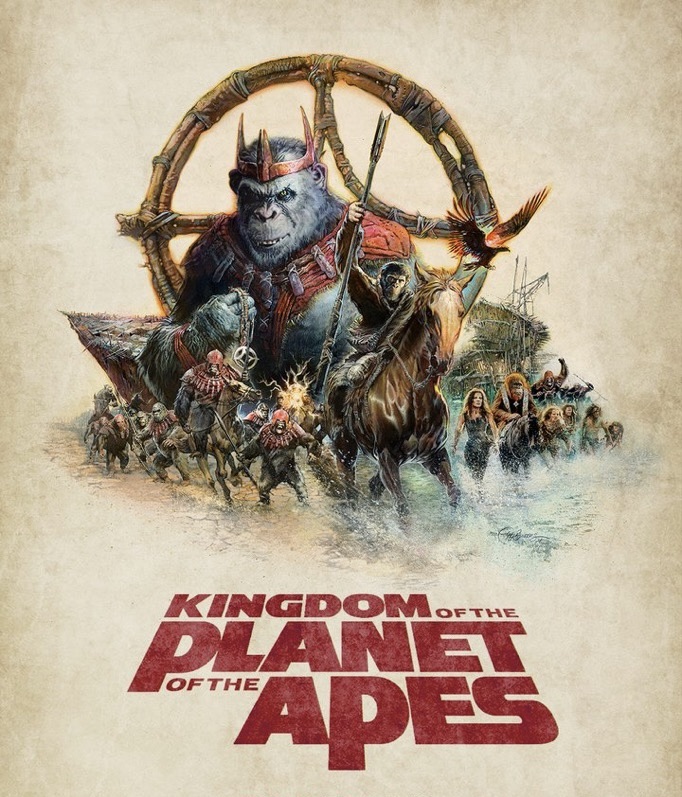
We also meet Trevathan (William H. Macy), a human collaborator with ambiguous motives, and Mae (Freya Allan), a human whose backstory remains frustratingly vague. One of the film’s more significant issues is how casually it treats its plot mechanics—there’s no real explanation for how humans regained speech, and the condition of the bunker (still functioning 300 years later) stretches credibility.
There are humans living in the wild, mostly mute, who are collectively referred to as “Eco,” while all women are still called “Nova”—we saw the genesis of this in War for the Planet of Apes. And this term remains here as a clear nod to the original 1968 film, which this movie echoes heavily, both in theme and visuals.
Despite the narrative shortcomings, the film is visually stunning. The CGI continues to evolve with each new installment, and the apes’ expressions and movement are more lifelike than ever.
The story doesn’t quite reach the emotional or intellectual heights of the previous trilogy. It drags early on, but begins to find its footing once Raka and Mae are introduced. The ending hints at a potential human resurgence, leaving the door open for what’s next. And with earlier clues about a missing space mission—referenced in Rise of the Planet of the Apes (2011) via news clips—so we might finally see the arrival of the astronauts, perhaps even the return of a Taylor-like figure.
This is reportedly the first film in a new trilogy. On its own, Kingdom feels more like a setup than a full step forward. Whether it truly pushes the rebooted Apes saga into meaningful new territory will depend on what the next chapters deliver.
KINGDOM OF THE PLANET OF THE APES (2024). 3 out of 5 Popcorn Bags 🍿🍿🍿

 Rod Rioja